Our great author, Stuart Miller-Osborne gets the idea for his articles from many different sources. Here we have a story which came into being by a visit to Bath. It is brilliant and I hope you enjoy it as much as I did.
Rita
About a year ago I had occasion to visit an exhibition of works by Matthew Smith at the Victoria Art Gallery in Bath. After I had viewed the paintings I found myself at a loose end as I had arranged to meet my son much later that afternoon. As there was no rugger on, I decided to explore the city.
It was not long before I found myself at an outdoor antique fair which is held in a car park next to the River Avon on most Saturday’s. I had visited this fair many times before and had purchased the odd item but on the whole, I found it a little expensive.
As I was leaving I noticed a battered trunk half hidden under some sacking. Just out of pure curiosity I lifted the sacking to see the labels attached. They were interesting but pretty run of the mill labels of Empire ranging from Southampton to Ceylon. Its initial owner, although well-travelled, remained anonymous.
What did catch my interest however was a fading destination marked in while chalk on the corner of the trunk.
Brazzaville
To many people the city of Brazzaville would mean little (apart from the location of the rather odd Guinness advert currently being shown on television).
But as person interested in African history it meant a lot to me as I had studied the almost forgotten Pierre Savorgnan de Brazza (1852-1905) and was very aware that the capital of the French Congo had been named after him. To this day it retains its name which is evidence of the esteem that this Italian born, French naturalised explorer is held in.
But who was Pierre De Brazza? I did not discover him immediately when reading about the great African explorers. It was when reading about the much maligned Henry Morton Stanley that I discovered that he had met this rather eccentric Italian.
 What attracted me to Pierre was the account of his manner, totally unique in the explorers of his day. He is recorded as having a charming personality and although European, was able to blend in with ease with the Africans he encountered and was known to walk through the jungle barefoot as his hosts would have done.
Pierre first visited Africa in 1872 when involved in an anti-slavery mission off Gabon. He later visited this country on a different ship and explored a couple of rivers, He proposed further exploration of the Ogooue river and this was funded by some of his friends in high places (he was of noble birth) as well as from his own pocket.
But this is where he differed. A number of explorers were funded by their countries with the aim of securing the lands they discovered. One must remember that the colonial mindset was at its height and most European countries were trying to spread their influence over Africa.
It has been well documented what happened in the Belgium Congo and how unwittingly Henry Morton Stanley became involved in King Leopold’s schemes. As I have noted before, this poor Welshman (who I believe to be the great African explorer) has been tainted by this blood ever since.
Stanley was a pragmatist and realised that if you were being attacked during your travels then it was essential to shoot back. Because of this his trains were heavily armed and again, some isolated incidents helped to blacken his name and this is part of the reason he is not buried in Westminster Abbey.
Pierre on the other hand went inland without arms (possibly not the best of ideas), only taking with him various textiles for barter and being accompanied by a couple of other Frenchman as well as some Senegalese laptots and a few interpreters. Using his considerable charm his mission was a success.
 Spurred on by this, a second one was soon proposed. This took place from 1879 to 1882 and really was a benign attempt to spread French influence in the areas explored. The idea was to ensure that as many kingdoms as possible were placed under the French flag without straying across other European borders. One must remember that although far from perfect the French aims were not as hostile as some other European influences in the area.
No European country (even our own) found their hands unstained by some blood during the Scramble for Africa which took place between 1881 and 1914 and that history can still be felt to this day with the various conflicts in Africa. The Europeans took no notice of historical tribal borders and substituted their own causing many unresolved problems which still haunt us.
This said, I remember a priest who visited my school noting that whilst the annexation of many African countries did a great deal of harm, he remembered being in the Belgium Congo in the 1950s prior to independence and noted that our neighbours had, after the bloody beginnings, laid a firm infrastructure in place in the country with many schools, hospitals and a railway network. “Out of the salt will come sweetness, but always be aware of the sour taste as it is never far away”, he said in as many words to a class of interested boys, including myself. His words were prophetic as one only has to look at the country now and see that many of the problems have returned with a vengeance.
 Pierre reached the River Congo in 1880 and not long after met Stanley and whilst they did not become firm friends, they respected each other although I am led to believe, that Stanley was rather surprised that Pierre and his peaceful methods had succeeded so well.
This rather eccentric Italian had done well and on the 30th November 1882 the areas he had influenced and some others became the French Congo. In geographical terms the area was huge and was composed of the present day Republic of Congo as well as Gabon and the Central African Republic (which sadly has been in the news recently for the wrong reasons. (It is interesting that the French Military have become involved in the conflict as well).
Pierre De Brazza was named governor of the French Congo in 1883 and really his influence for the good meant unusually this was something of a success story for the inhabitants of the areas governed. Yes the French exploited the area as all the European powers were doing but to some extent, they were giving something back which was in direct contrast to what was happening across the river in the Belgium Congo where atrocities were common place and accepted.
Although fiction, Conrad’s Heart of Darkness (1899) gives the reader a feel of what was happening in this part of Africa, Mr Kurtz and all.
But this was not to last and in 1897 Pierre was dismissed from his post due to poor profits but it was also thought that the inhabitants were treated too well.
As far as I can see, he returned to Europe in retirement a disappointed man. Yet there was a sting in the tail.
In 1905 there were reports reaching Paris that the new governor an Emile Gentil was turning a blind eye to injustices and brutality in the colony. Pierre was sent to investigate the situation and his report condemned what was happening. His good work had been undone. But when the report was given to the National Assembly it was sadly suppressed.
But the journey and the investigation had also taken the toll on the ailing Pierre and on the return journey in Dakar, he died of fever (although there is a strong rumour, never disproved, that he had been poisoned because of his findings).
Rather cynically he was given a state funeral and interred in the cemetery of Pere Lachaise. His widow disgusted at the politician’s behaviour had his body exhumed and reinterred in Algiers. His epitaph read “une memorie pure de sang humain” I will not translate this as I think it reads better in Pierre’s adopted language.
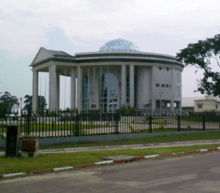
 This however was not the last of Pierre’s post death travels for on the 30th September 2006, his remains were exhumed once again (along with those of his wife and children) and returned to Brazzaville to be placed at rest in a new marble mausoleum. This caused controversy due to the cost (in the region of five million pounds) and that the Congolese who fought for independence were ignored.
Pierre would not have liked this as he was simple man with charm to spare, who cared greatly for the African people. He helped to stop slavery and was an ardent humanist.
Whilst it is always nice to see a hero celebrated, this was done with the wrong motives in mind. A stunning mausoleum is not the way to remember this man. He would have wanted the finance put to better uses in this poor country. Improvement comes through education not monuments. Improvement comes through a better infrastructure. Improvement originates in people’s minds. I think he may have thought this way.
But what of the scruffy trunk? Well I did not purchase it as I would have done myself an injury carrying it around Bath and I would have most probably accepted some inquisitive glances.
I did not even photograph it as I had let my mobile run out of charge (as normal). I just recorded it in my memory.
To have studied the African explorers was always a pleasure but to have met this lyrical Italian with his musical voice was special. He may not have covered the miles of Stanley and Burton or lived in the memory as Livingstone and Park but he was the most unusual of African explorers and to an extent this is the reason that outside of France he is somewhat forgotten.
 Strangely enough one can, if they look hard, still find memorabilia connected with De Brazza. He was an extremely handsome man and to finance some of his expeditions had photographs taken by Nadar, amongst others. He was celebrated on postcards and stamps and even had a ship named after him, the Savorgnan De Brazza. His letters are collected in books and there are many other artefacts to be found.
 I have not yet found any of these items in Hungerford yet but I will keep on looking. As I left that small antique market in Bath it started to rain. I had covered the trunk in its sacking again so that the small chalk destination would remain on its decaying surface at least for a few more years.
Stuart Miller-Osborne
 Hungerford Arcade stallholder, Adam Thompson (Unit 50) is holding a Vinyl Record Valuation day this Saturday at the Arcade. Do come along with your record(s) and he will tell you their value. Adam also buys records if you wish to sell them.